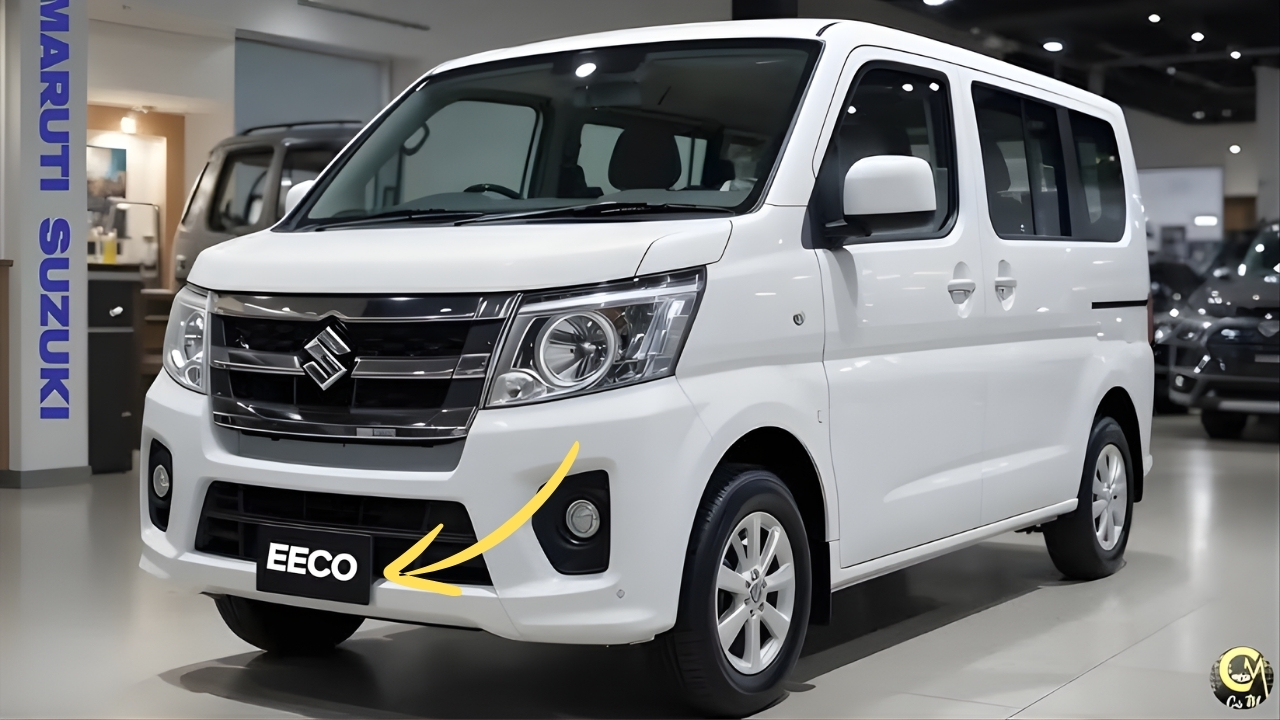
Maruti Suzuki Eeco : Every street corner in India tells a story of hustle, and right in the thick of it sits the Maruti Suzuki Eeco.
This no-frills van, born in 2010, just notched 16 years and crossed 1.3 million sales by early 2026, shrugging off EV buzz and sky-high fuel bills like an old pro.
Fleet owners from Yamuna Nagar to Mumbai can’t get enough, praising its wallet-friendly CNG runs amid petrol’s ₹105/litre sting.
Maruti’s kept it real—minor facelifts, beefed-up safety, same unbeatable value from ₹5.18 lakh ex-showroom.
It’s the taxi that never quits, the cargo hauler that fits anywhere, the family bus for weekend chaos.
But with stricter BS6 Phase 2 norms and rivals circling, can this box on wheels keep dominating? Buckle up for the full scoop.
A Timeless Design That Delivers
Flash back to its debut: replacing the clunky Versa, the Eeco stormed in with a cavernous 3.67m body, 2.35m wheelbase, and room for seven souls or 510L cargo.
By 2026, it owns 92% of the MPV van slice, no small feat in a SUV-crazy market.
A Haryana trader I know swears his Eeco’s hauled 800kg of plywood through monsoons without a whimper—ladder chassis and rear-wheel drive make it a beast off tar.
Service bills? Laughably low at ₹2,800 every 10k km. Resale via Arena outlets holds at 75% after five years, trouncing flashier peers.
Rural folks love the 4.5m turning circle for village lanes; urban cabbies dig the sliding doors for quick hops. It’s basic vinyl seats and all, but zero breakdowns mean pure profit.
Power and Efficiency Tuned for Reality
Heart of the 2026 Eeco is the zippy 1.2L K12N Dual Jet engine—E20 petrol-ready, spitting 80.76PS/104.4Nm on gas for 19.71 kmpl ARAI.
CNG kit? 70.67PS/95Nm and a stellar 26.78 km/kg, dual tanks holding 65L equivalent. Five-speed manual clicks smoothly; real-world city sips hit 24 km/kg on CNG, per fleet logs.
Picture a Delhi driver: 300km daily on ₹500 CNG fill-ups versus ₹1,200 petrol. No surprise 45% sales are CNG now.
RWD bites loaded, ground clearance at 160mm clears speed bumps. Highway? Cruises 100 kmph steady, though wind howl picks up. No AT option hurts some, but clutchless dreams wait for fancier rides.
Safety Leapfrogs the Critics
Early Eeco took NCAP heat, but 2026 flips the script: six airbags standard across board, ABS/EBD, rear sensors, pretensioners, and hill-hold in Tour trims.
Clear-lens taillamps, digital cluster from K10, and seatbelt chimes add polish. Brakes—front discs—halt from 80 kmph in 28m, wet or dry.
Testers hail the sturdier build; one ambulance operator noted zero frame cracks after 2 lakh km. Child locks on sliders, immobiliser, and speed-sensitive door locks seal the deal.
Still no ESP everywhere, but for pothole paradise, it’s safer than ever. Rivals like Supro lag here.
Also Read This : Maruti Suzuki Grand Vitara – 1.5 litre petrol engine SUV with luxurious features, price is just ₹10.50 Lakhs
Practical Cabin, Zero Fuss
Hop in: AC chills fast, rotary vents sturdy, reclining fronts comfy for long hauls. Seven-seater benches fold flat; Cargo skips rears for 540L bay.
New hues—Brisk Blue, Glistening Grey—pop against plain steelies. 32L petrol tank (65L CNG) means fewer stops; dome light with saver.
Ride floats over ruts thanks to soft suspension; NVH fine under 90 kmph. Drawbacks? No armrests, basic audio bay.
But for school vans or veggie runs, it’s spot-on. Kerb weight 940-1085kg keeps it peppy.
Maruti Suzuki Eeco Price King in a Crowded Garage
Starts at ₹5.18 lakh (5S), peaks ₹6.45 lakh (CNG Cargo AC)—on-road ₹6-7.5 lakh. Triber’s ₹7 lakh+ with bells; Supro diesel rougher at ₹8 lakh.
Eeco’s monthly 13k units dwarf them, split 55% petrol/45% CNG. Ambulance packs shine in health drives.
Maruti hints at CNG-electric tweak, but core stays fossil-faithful. True Value flipped 65 lakh used units last year.
For grinders—Yamuna Nagar merchants, nationwide hustlers—it’s income on wheels.
The Eeco won’t turn heads or track times. No sunroofs, no ADAS. Yet it powers India’s backbone: taxis ferrying dreams, traders chasing deals, families squeezing in.
Sixteen years, millions served, still the van that works hardest while others pose. Next time you squeeze past one in traffic, tip your hat—it’s carrying the load.