Renault Kwid EV : The Renault Kwid EV has been making waves with recent spy shots in India and its global reveal in Brazil, signaling a potential 2026 entry into the Indian market.
This pint-sized electric hatchback, essentially a rebadged Dacia Spring EV, promises to shake up the budget EV segment with its city-friendly specs and fresh design.
Spy Shots Ignite Excitement in India
Test mules of the Renault Kwid EV have been spotted uncovered on Indian roads multiple times, hinting at an imminent launch.
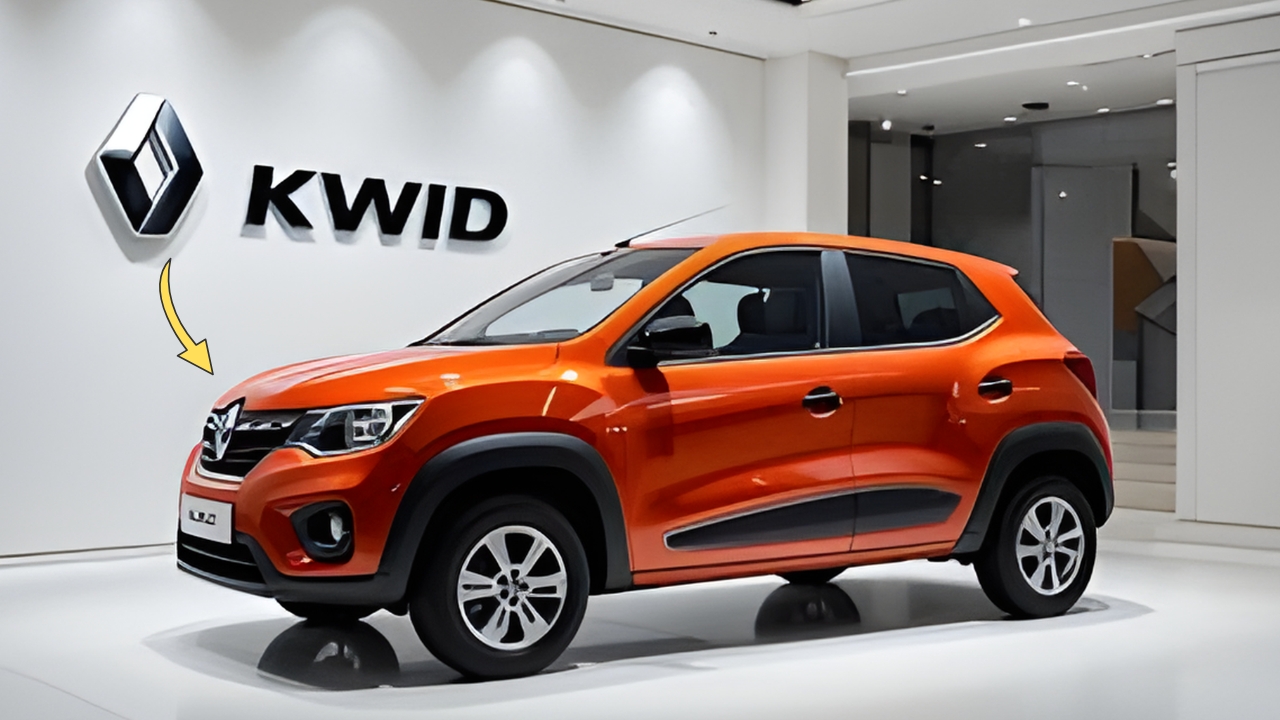
These sightings show a design closely mirroring the Dacia Spring, complete with Y-shaped LED DRLs, a closed front grille with a central charging flap, and glossy black accents.
The rear features connected Y-pattern taillights via a black panel, giving it a modern SUV-like stance despite its compact hatchback body.
Observers noted the EV’s subtle camouflage, focusing changes around the bumpers and lights to scream “electric” without overhauling the familiar Kwid silhouette.
Renault’s testing in varied conditions suggests they’re fine-tuning for Indian roads, potholes, and heat – crucial for real-world reliability.
With the regular Kwid already a bestseller for urban commuters, this EV version could inherit its nimble handling and space efficiency.
Global Reveal in Brazil Sets the Template
Renault officially unveiled the Kwid E-Tech EV in Brazil last October, pricing it around Rs 16 lakh locally – a teaser for emerging markets like India.
The facelifted model sports a bolder front fascia with horizontal grille elements, sculpted bonnet, and black cladding on doors and arches, measuring 3,701mm long with a 2,423mm wheelbase.
Its 290-litre boot stands out for a sub-4m EV, perfect for grocery runs or weekend getaways.
Inside, it blends retro vibes with tech upgrades: a flat-bottom steering wheel, 7-inch digital cluster, and 10.1-inch touchscreen supporting wireless Android Auto and Apple CarPlay.
Manual AC dials keep costs down, but silver garnishes on vents add flair reminiscent of higher-end Renaults like the Duster. This mix feels practical for daily drivers who want connectivity without complexity.
Powertrain and Range for City Warriors
At heart, the Kwid EV packs a 26.8kWh lithium-ion battery powering front-wheel-drive motors in two tunes: 46 PS or 65 PS (48kW), with torque around 113-125 Nm.
Expect WLTP ranges of 220-305 km, though real-world city use might hit 180-250 km per INMETRO tests – ideal for metro hopping without range anxiety.
Acceleration is leisurely at 0-100 kmph in 14.6-19 seconds, topping 125-130 kmph, prioritizing efficiency over speed thrills.
Charging is straightforward: up to 7kW AC for overnight top-ups or 30kW DC for 20-80% in 45 minutes.
Renault’s focus on local battery sourcing could push localization to 85-90%, slashing costs and aiding subsidies under India’s EV push.
Compared to the petrol Kwid’s zippy 1.0-litre engine, this EV swaps noise and fumes for silent, instant torque – a game-changer for traffic-clogged streets.
Packed with Features and Safety Tech
The Kwid EV steps up with a 10-inch infotainment screen, auto AC, wireless charger, and all-four power windows – amenities rare in budget EVs.
Level-1 ADAS shines here: automatic emergency braking, lane-keep assist, traffic sign recognition, and adaptive cruise control across up to 11 functions.
Safety basics include ESC, TPMS, rear camera, hill-hold, and multiple airbags.
Digital interiors borrow from pricier siblings, with improved materials over the old Kwid, though some plastics feel basic.
For Indian buyers, this means ventilated seats or rear armrests could be variant-specific perks, enhancing comfort in humid climes.
Renault’s RDE-compliant tech from ICE models hints at robust engineering for emissions-free motoring.
Pricing and Rivals in the Budget EV Arena
Expected to start at Rs 7-8 lakh ex-showroom, the Kwid EV undercuts the Tata Tiago EV (Rs 8-12 lakh) and Citroen eC3, while matching the MG Comet’s affordability.
At this price, it eyes first-time EV adopters, fleet operators, and tier-2 city folks seeking low running costs – pennies per km versus petrol’s volatility.
Renault’s 55-60% initial localization aims for value, potentially qualifying for FAME incentives.
It’ll battle the Tiago EV’s 300+ km range and the Comet’s ultra-compact vibe, but Kwid’s SUV styling and proven reliability give it an edge.
MG Comet users praise its nimbleness, yet complain of space; Kwid EV promises more boot and legroom. If priced right, it could grab 10-15% market share in sub-Rs 10 lakh EVs, boosting Renault’s 2026 sales.
Also Read This : Volkswagen Tayron – Full loaded features SUV launch in market with luxury design
Why India Needs the Renault Kwid EV Now
Urban India is choking on emissions, with EVs hitting record sales in 2025 – doubled to over 90k units in H1 FY26.
Government mandates for 30% EV adoption by 2030 make affordable options like this vital, especially with falling battery prices.
Renault’s delay – waiting for infra like charging networks – shows smart timing; now, with Pravaig ties and Duster EV rumors, they’re geared up.
Challenges remain: range for highways, service reach in small towns, and resale perceptions. Yet, Kwid’s decade-long trust (millions sold) translates to EV faith.
Early adopters rave about silent drives and zero tailpipe pollution, perfect for Panipat’s growing middle class eyeing green mobility.